
Running a Proprietary Event? Why the Decorator Matters
On a private event, your decorator shapes more of the exhibitor and attendee experience than almost anyone else on the team. What they do, and why the right one matters.

If you run your own show, a dealer meeting with an expo, a customer conference with a sponsor floor, a partner summit, you'll need a decorator. Some people call it the general contractor or the GC. Same job, different name, depending on who you ask.
Most show owners treat it as a line item: someone has to lay the carpet and hang the drape. But on a proprietary event, the decorator shapes more of the attendee and exhibitor experience than almost anyone else on the team. Picking the right one is a bigger decision than it looks.
What a decorator actually does
On the show floor, the decorator's job is to manage the floor. That usually includes:
- The floor plan. Laying out the hall, sizing the booths, and helping assign spaces.
- The exhibitor kit. Deadlines, rules, order forms, and an online ordering site where exhibitors buy furniture, carpet, electrical, AV, and labor.
- Collecting orders and payments. And often staff to help sell space or handle exhibitor contracts.
- Building the floor. Backwall and side rail, aisle carpet, perimeter drape, and the booth packages exhibitors ordered.
- Electrical, lighting, audio, and video. Running power to every booth and installing what exhibitors and sponsors asked for.
- The front door. The hall entrance, registration, and the signage around it.
- Freight. An advance warehouse that takes in exhibitor shipments before the show and delivers them all at once, then handles move-out and return shipping when it's over.
It's a lot of moving parts, and most of them land on your exhibitors.
Big shows and private shows need different things
For a large public or association show, a national decorator makes sense. You get scale. You get a large local crew in every city. Thousands of exhibitors are processed the same way, every time.
What you don't always get is someone looking out for your event specifically. The crew in Las Vegas isn't the crew in Orlando. The people on your floor this year probably won't be there next year.
A proprietary event is different. The audience is smaller. Exhibitors are there to have real conversations with the people in the room, not to scan as many badges as possible. And the event is usually a direct reflection of your brand, in front of your customers, dealers, or partners.
That calls for a different kind of decorator.
It shouldn't look like a trade show
The fastest way to make a private event feel ordinary is to fill it with the same pipe and drape, the same folding tables, and the same registration counters people have seen at every convention center for decades.
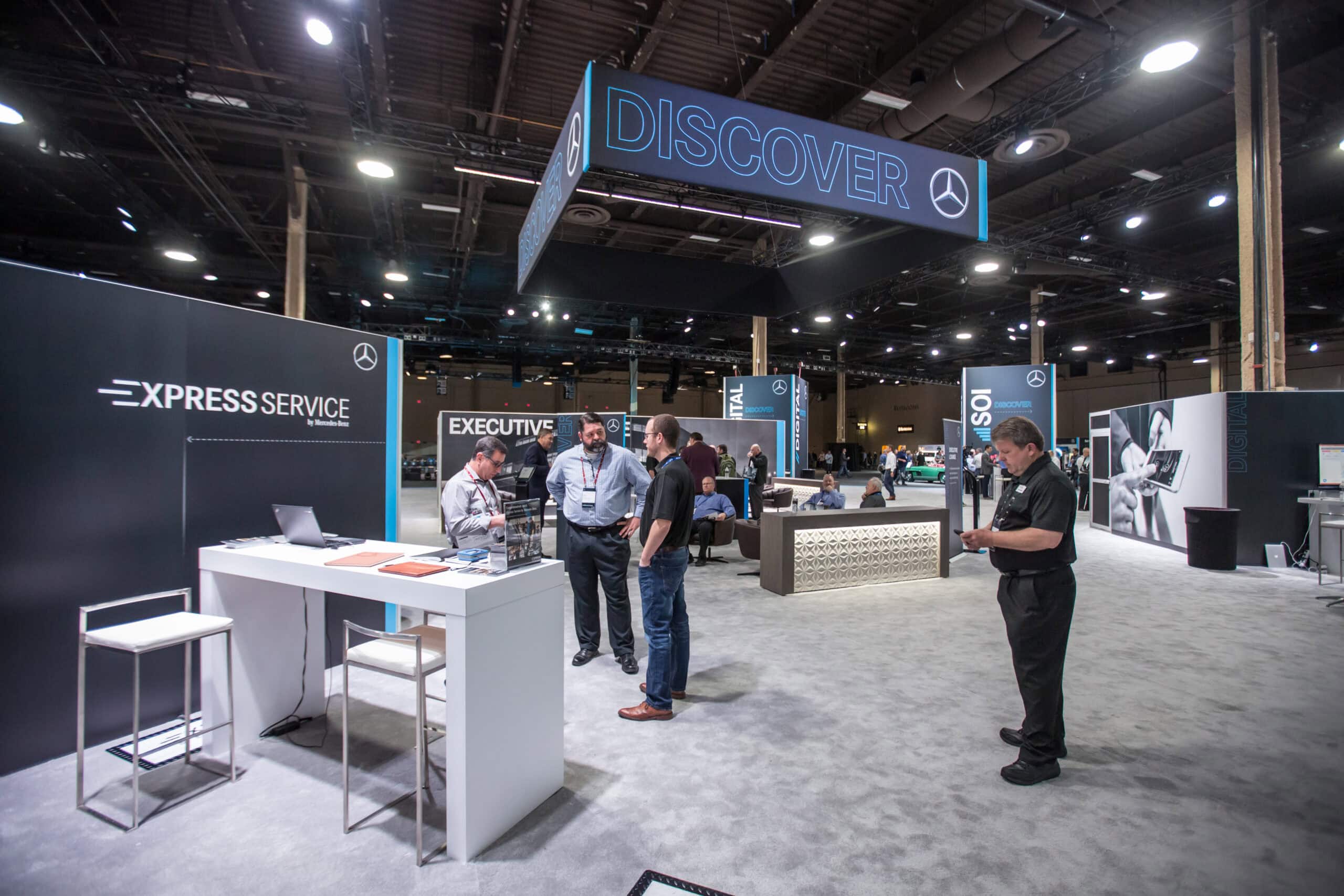
A private event should feel more elevated, more exclusive, and more engaging than the big show down the street. A creative decorator helps you get there:
- Registration that sets the tone. Custom counters and an entrance that tells people where they are before they've picked up a badge.
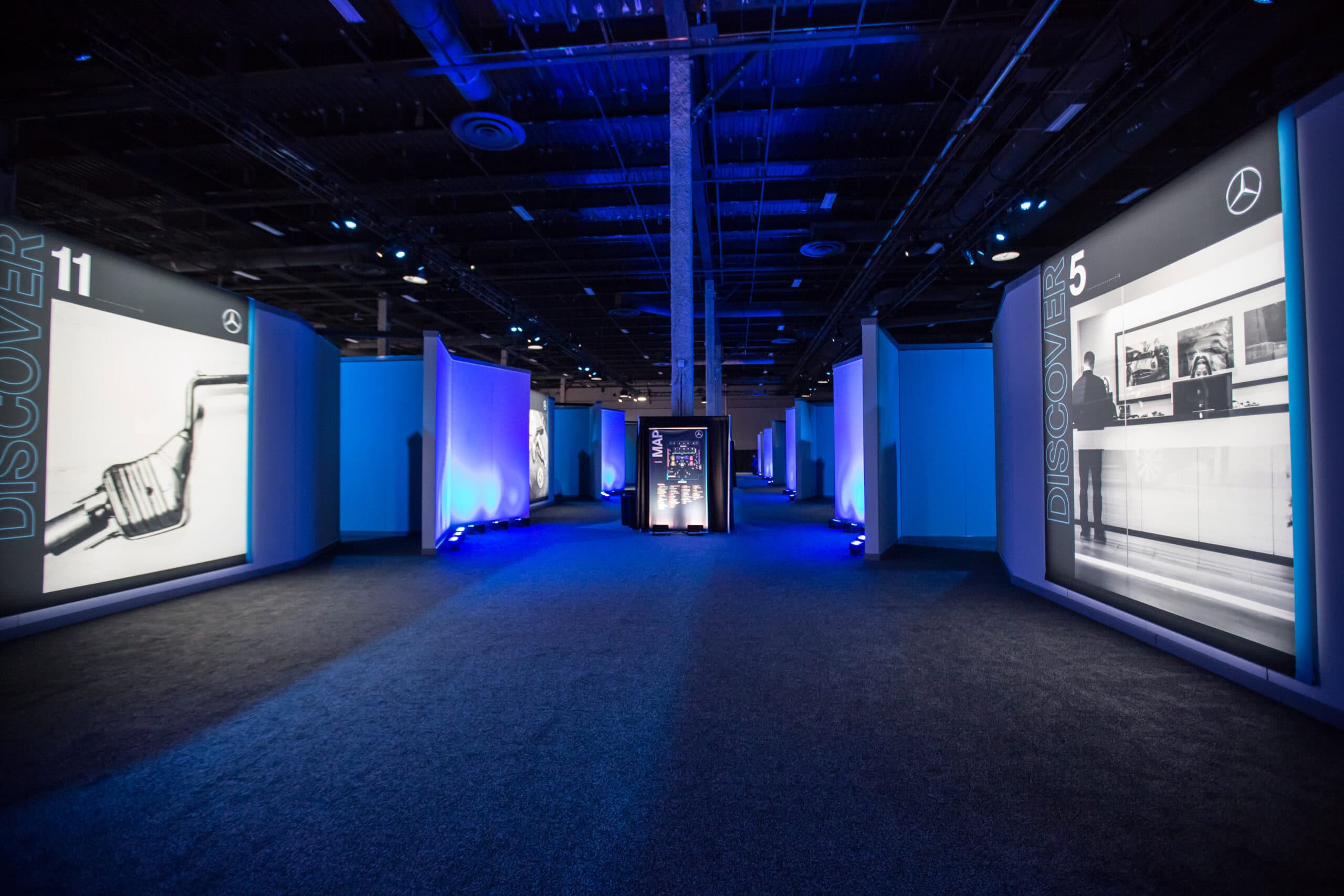
- Signage that's designed, not just printed. Wayfinding, sponsor recognition, and directional signs that carry the event's look instead of fighting it.
- A floor that works for conversations. Lounge seating, meeting spaces, and booth packages that look like they belong to the event, not to a rental catalog.
- AV on the floor, not just on stage. LED walls, ambient music, lighting that changes the feel of the room between the expo, the reception, and the session.
- Branding that holds together. The same look from the general session to the expo hall to the last sign on the way out.
When the floor is designed as part of the event, exhibitors look better, attendees stay longer, and sponsors see what they're paying for.
The same team, year after year
A mid-sized decorator travels with your show. The people who run your floor in one city are the same people who run it the next year somewhere else.
That continuity matters more than it sounds. The crew already knows your floor plan, your exhibitors, and what went wrong last time. Nobody has to relearn the event.
It also means your decorator hears things you don't. Exhibitors talk to the people setting up their booths. They're often the first to say what's working, what isn't, and what they'd like to see next year: the aisle that never gets traffic, the move-in window that's too tight, the reception that ran long. A decorator who knows your show can bring that back to you before it shows up in a survey, or in a sponsor who doesn't renew.
A partner, not an order desk
A large decorator runs on a rate card. Every pound of freight, every hour of labor, every outlet is priced the same way for every show, and the show owner is treated like one more customer.
That can lead to surprises. One company we know ran its own show in a major convention city and found out afterward it had been charged full drayage rates on its own freight. On its own show.
A decorator on a proprietary event should be working for the show, not just filling orders. That means pricing with some flexibility. If you want to bring in something big, a vehicle, a piece of equipment, a custom build that weighs a lot, the answer shouldn't be a freight bill that kills the idea. The goal is to build a better show, not to collect more drayage.
It also means being part of the planning, not just the fulfillment. A good partner will tell you where the floor plan is working against you, where the budget is going, and where a different approach would cost less and look better.
One point of contact, for you and your exhibitors
On most events, the general session and the expo floor are run by different companies. The show owner sits in the middle, translating between them, chasing answers, and catching what falls through the gap.
One team for both changes that:
- For you: one contract, one schedule, one budget, and one person to call. Load-in for the stage and the floor gets planned together, not negotiated on site.
- For your exhibitors: one kit, one ordering site, one invoice, and one person who knows the answer. No bouncing between the decorator, the AV company, and the venue.
- For the event: the theme, the vocabulary, and the look carry straight from the main stage onto the floor, because the same people built both.
That last point is easy to underestimate. If your general session introduces a big idea, the expo is where attendees should see it, touch it, and talk about it. That's much easier when the session and the floor are designed together. (More on that in Why General Sessions Fail.)
What to ask a decorator
If you're choosing a decorator for a proprietary event, a few questions will tell you a lot:
- Will the same project lead and crew work our show every year?
- Can we see an exhibitor kit and ordering site you've built for another private event?
- What do registration, entrance, and signage look like on your shows, beyond the standard package?
- How do you handle freight, the advance warehouse, and move-out?
- Can you handle AV on the floor, and do you coordinate with the general session team, or are you the general session team?
- How is drayage priced for us as the show owner, and for things we want to bring in?
- How will you share exhibitor feedback with us after the show?
The answers will separate a decorator that processes your floor from one that helps you run your event.
Photos

Questions we hear
Is a decorator the same as a general contractor?
Yes. Decorator, general contractor, GC, and general service contractor all describe the company that manages the show floor. The term depends on who you ask.
What's the difference between a proprietary event and a trade show?
A proprietary (or private) event is run by one company for its own customers, dealers, partners, or employees, often with an expo or sponsor floor. A trade show is usually run by an association or show organizer and open to an entire industry.
Should a show owner pay drayage on its own show?
It depends on the contract, but it shouldn't come as a surprise. On a proprietary event, ask up front how the decorator prices drayage for the show owner's own freight and for large or heavy items.
How big a show can Cadence manage as decorator?
We act as decorator and general contractor for private shows of up to about 250 exhibitors or 250,000 square feet of floor.
